
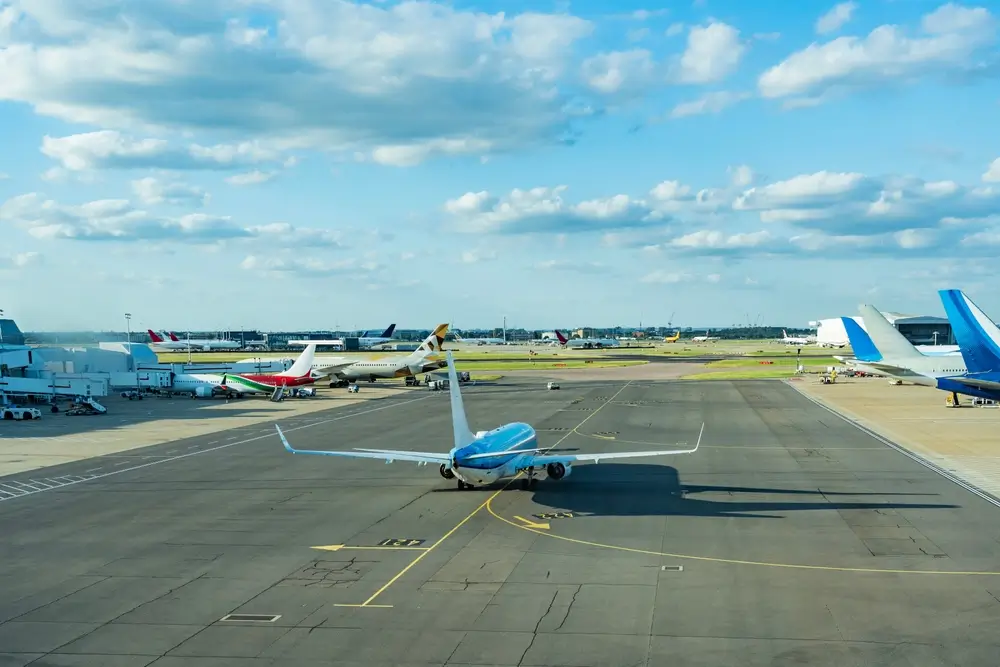
Planning a trip across Great Britain and Northern Ireland? A clear view of UK airports, their regions, and their airport codes helps you pick the most convenient route, compare fares, and avoid long overland connections.
This friendly, practical guide organises Britain’s airports by region, highlights the largest hubs, and answers common questions, such as how many airports are in the UK and which London airports handle the most flights. Use it to plan smooth door‑to‑door journeys and connect each airport to local transport or a reliable transfer.
Note on scope: The UK has dozens of licensed aerodromes. Below, we focus on passenger airports serving scheduled or frequent charter services, grouped by region and IATA code (3 letters). Smaller fields and seasonal routes change more often; always verify flights when you book.
Why airport codes matter?
The short three‑letter IATA code (e.g., LGW) appears on tickets, baggage tags, and booking engines. Knowing your code reduces mix‑ups, especially around London, where multiple airports serve the region. It also helps when requesting a transfer or a quote, because you can specify the exact airport.
London & South East England
These are the busiest gateways for international traffic from England’s airports.
Airport | IATA | Region/County | Notes |
| London Heathrow | LHR | Greater London | UK’s busiest long‑haul hub; multiple terminals |
| London Gatwick | LGW | West Sussex | Major leisure and long‑haul; North & South Terminals |
| London Stansted | STN | Essex | Large, low‑cost, and European network |
| London Luton | LTN | Bedfordshire | Strong European and charter footprint |
| London City | LCY | East London | Close to City/Canary Wharf; steep‑approach ops |
| London Southend | SEN | Essex | Smaller; services vary by season |
| Southampton | SOU | Hampshire | South Coast gateway; regional Europe |
| Bournemouth | BOH | Dorset | Seasonal leisure and charters |
| Oxford | OXF | Oxfordshire | Limited/semi‑scheduled and business traffic |
South West England
| Airport | IATA | Region/County | Notes |
| Bristol | BRS | Somerset | Largest hub in the South West |
| Exeter | EXT | Devon | Regional UK/Ireland; seasonal Europe |
| Newquay Cornwall | NQY | Cornwall | Key for Cornwall; summer peaks |
Midlands (West & East)
| Airport | IATA | Region/County | Notes |
| Birmingham | BHX | West Midlands | Major national/international hub |
| East Midlands | EMA | Leicestershire | Passenger flights and a large cargo base |
North West England
| Airport | IATA | Region/County | Notes |
| Manchester | MAN | Greater Manchester | UK’s largest airport outside London |
| Liverpool John Lennon | LPL | Merseyside | Popular in Europe and Ireland |
| Isle of Man (GB Crown dependency) | IOM | Irish Sea | Important regional link (not part of the UK proper) |
Yorkshire & The North East
| Airport | IATA | Region/County | Notes |
| Leeds Bradford | LBA | West Yorkshire | Domestic and European routes |
| Newcastle | NCL | Tyne and Wear | North East hub for Europe and the Middle East links |
| Teesside International | MME | County Durham | Regional services; business focus |
Scotland
| Airport | IATA | Region/Area | Notes |
| Edinburgh | EDI | Lothian | Scotland’s busiest; broad international spread |
| Glasgow | GLA | Greater Glasgow | Long‑standing European network |
| Aberdeen | ABZ | Aberdeenshire | Energy sector links: Northern Europe |
| Inverness | INV | Highlands | Highlands gateway; domestic/seasonal Europe |
| Glasgow Prestwick | PIK | Ayrshire | Mixed traffic; seasonal |
| Dundee | DND | Tayside | Small regional services |
Wales
| Airport | IATA | Region/County | Notes |
| Cardiff | CWL | Vale of Glamorgan | Wales’ principal passenger airport |
| Anglesey (RAF Valley – civilian) | VLY | Isle of Anglesey | Limited scheduled public service |
Northern Ireland
| Airport | IATA | Region/County | Notes |
| Belfast International | BFS | County Antrim | Largest NI airport |
| Belfast City (George Best) | BHD | Belfast | Close to the city centre; frequent UK routes |
| City of Derry | LDY | County Londonderry | Regional services |
Big airports in the UK: quick snapshot
| Rank (typical) | Airport | IATA | Known for |
| 1 | London Heathrow | LHR | Global long‑haul hub and premium alliances |
| 2 | London Gatwick | LGW | Major leisure/long‑haul and European networks |
| 3 | Manchester | MAN | Largest outside London; wide long‑haul choice |
| 4 | London Stansted | STN | Extensive European low‑cost routes |
| 5 | London Luton | LTN | High‑frequency European leisure |
| 6 | Edinburgh | EDI | Scotland’s busiest; growing long‑haul |
| 7 | Birmingham | BHX | Central England reach; strong connectivity |
(Ranking varies year by year; this is a general view to help orientation.)
How many airports are there in the UK?
The answer depends on definitions. If you mean airports in the UK with regular scheduled passenger services, the number generally falls in the 40+ range, changing with seasons and airline decisions. If you include licensed aerodromes and smaller fields, the count is significantly higher. For trip planning, focus on the list of airports with current passenger flights in your region and check frequency.
London specifically: how many airports are in London, England?
Greater London is served by six principal passenger airports commonly associated with the city: LHR, LGW, STN, LTN, LCY, and SEN. Not every route operates year‑round, but together they cover long‑haul, short‑haul, business, and leisure.
Choosing the right airport for your trip
When comparing British airports for a journey, consider:
- Origin and destination: Pick the closest viable airport at both ends to minimise ground time.
- Schedule reliability: Larger hubs offer more daily flights, which is handy if you need flexibility.
- Baggage and mobility: Smaller airports can be quicker from kerb to gate; bigger hubs offer more facilities.
- Total trip cost: A cheaper fare from a far airport may be offset by longer rail/taxi links.
- Seasonality: Leisure routes can be highly seasonal, especially in coastal and island regions.
Door‑to‑door planning with transfers
A smooth plan often pairs the right airport with a clear ground‑transfer strategy. If you’re landing late, travelling as a family, or carrying heavy luggage, a direct transfer makes the last mile easier. Share your airport code, terminal, passenger count, and luggage details when you request a quote; it keeps pricing clear and vehicles right‑sized for your party.
About Camberley Car
Camberley Car is a UK taxi and private transfer company. If you need a reliable ride to or from any of the airports in England or beyond—London hubs, the North UK airports, or regional fields—you can request a fixed quote, specify your IATA code, and book the correct vehicle class for your luggage and group size.
FAQs
1. What’s the difference between IATA and ICAO airport codes?
IATA codes are the three‑letter codes used on tickets and baggage (e.g., LHR, MAN). ICAO codes are four letters used in aviation operations (e.g., EGLL for Heathrow, EGCC for Manchester). For most travellers planning UK airport trips, IATA is the key code you’ll use.
2. Which London airport should I choose?
Pick based on your destination and airline. Heathrow (LHR) is strong for long‑haul and premium alliances. Gatwick (LGW) has a wide European and long‑haul mix. City (LCY) is closest to the central business districts. Stansted (STN) and Luton (LTN) host many low‑cost European services, while Southend (SEN) operates more selectively. Weigh flight times, fares, and ground links.
3. Are there many airports in the north of England?
Yes—Manchester (MAN) anchors the North West, with Liverpool (LPL) nearby. Leeds Bradford (LBA) and Newcastle (NCL) serve Yorkshire and the North East, while Teesside (MME) offers additional regional links. When searching airports north of England, compare the total journey time from your home, not just airfare.
4. How early should I arrive at UK airports?
For short‑haul within Europe, arrive 2 hours before departure; for long‑haul, 3 hours is common. Smaller airports can be quicker kerb‑to‑gate, but always check your airline’s guidance and allow extra time at school holidays or peak weekends.
5. What’s the easiest way to get a transfer quote?
Share your IATA code (e.g., LGW), terminal, flight time, pick‑up postcode, passenger count, and luggage. Ask for a fixed fare with any waiting time or parking charges explained up front. If you need the return, request both legs together; it often reduces the combined price and simplifies planning.
Conclusion
Understanding the list of airports in the United Kingdom — from London’s major hubs to regional links in Scotland, Wales, and Northern Ireland — helps you balance convenience, cost, and time. Use IATA codes to avoid confusion, compare routes by region, and plan your ground transport alongside your flights. When you’re ready to travel, a clear transfer plan keeps the last mile stress‑free, so you arrive on time, with luggage handled, and the journey joined‑up end to end.
Google Map Link: https://maps.app.goo.gl/LRWyd7JC3RNoTeYW9
Facebook Link: https://www.facebook.com/people/Camberley-Cars/100063738542899/
Instagram Link: https://www.instagram.com/camberleycars/
Facebook Link: https://www.facebook.com/people/Camberley-Cars/100063738542899/
Instagram Link: https://www.instagram.com/camberleycars/