
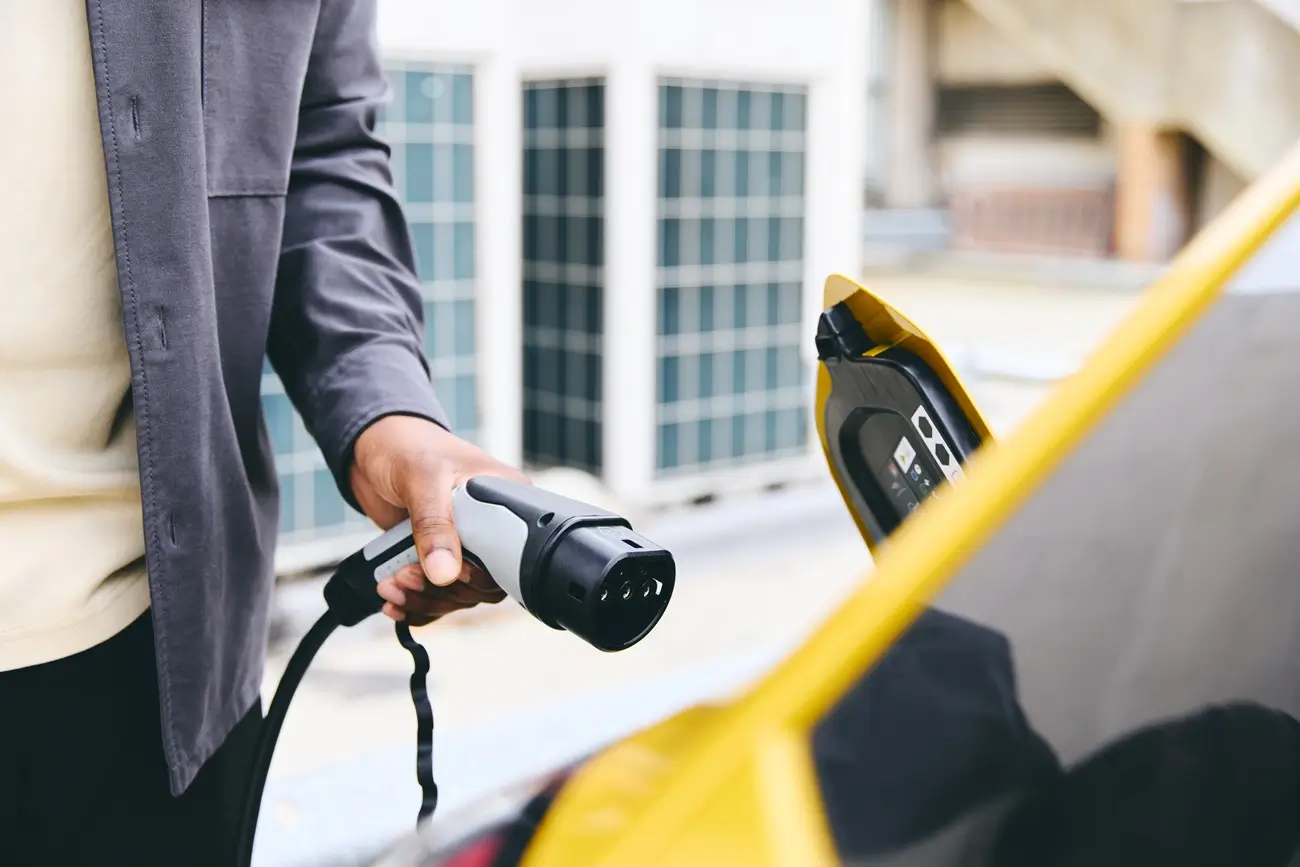
Picture a quiet 5 am pickup in Camberley for an early Heathrow run. A sleek saloon pulls up, the boot opens silently, and the only sound is a soft electric hum.
Scenes like this are becoming more common across Surrey, not just central London. For passengers and drivers alike, electric taxis raise real questions about cost, range, charging, and comfort.
This guide covers what you need to know, drawn from years of dispatching pre-booked airport transfers at Camberley Cars.
What Counts as an Electric Taxi in the UK?
An electric taxi is a battery-powered or range-extender private hire vehicle used for paid passenger journeys. In the UK, this covers everything from a Tesla Model 3 used by a local PHV driver. It also includes the iconic LEVC TX. This is the electric London taxi that replaced the old diesel black cab.
The key split is between battery-only EVs and range-extender models like the LEVC TX. It has a small petrol generator that tops up the battery on long journeys. Both qualify as zero-emission capable for most council licensing needs, but they act dramatically differently on long routes. One example is Camberley to Southampton Airport.
Also Read: 10 Best MPVs for Chauffeurs & Taxi Drivers
How Much Does an Electric Taxi Cost to Buy and Run?
The upfront cost is the first hurdle. A taxi-ready electric MPV like the Mercedes EQV starts above £75,000, while the LEVC TX London taxi sits around £65,000. A used Nissan Leaf or Kia e-Niro can come in under £20,000, which is why so many smaller PHV fleets start there.
Running costs are where electric taxis pull ahead. Home charging on an off-peak tariff can cut fuel costs to about 4 to 6 pence per mile.
A diesel saloon costs about 15 to 20 pence per mile. Service intervals are longer, and brake wear is lower thanks to regenerative braking.
That said, public rapid charging is expensive. Topping up at a motorway services site near the M3 can cost 75 to 85 pence per kWh. This can cut your savings on long runs. Insurance for an electric taxi cab is often slightly higher than for a diesel one. The gap is closing.
Best Electric Cars for Taxi Drivers in the UK
The right vehicle depends on the type of work. Short local runs around Frimley, Yateley, and Sandhurst suit a compact EV. Long airport transfers to Gatwick or Stansted demand a real range and rapid charging support.
| Model | Real-World Range | Rapid Charge (10 to 80%) | Seats | Best For |
| Nissan Leaf | 140 to 170 miles | 45 mins | 5 | Local PHV work |
| Tesla Model 3 Long Range | 280 to 310 miles | 25 mins | 5 | Executive airport runs |
| Kia e-Niro | 230 to 270 miles | 45 mins | 5 | Standard saloon taxi work |
| LEVC TX | 64 electric + petrol extender | 30 mins | 6 | London hackney, long range |
| Mercedes EQV | 180 to 210 miles | 45 mins | 7 to 8 | Group transfers and minibus work |
For single-car drivers, the Tesla Model 3 Long Range is still one of the best electric taxis in the UK. It balances range, charging speed, and resale value. For families and group transfers, an electric MPV like the EQV covers most airport routes without a recharge stop.
Benefits of Electric Taxis for Passengers
For passengers, the gains are immediate. The cabin is quieter, which makes a 55 am Heathrow run feel less stressful and a late-night return more restful. There is no diesel smell, no engine vibration at traffic lights, and acceleration is smooth from a standstill.
Air quality matters too. With Clean Air Zones expanding in UK cities, an electric taxi can help you avoid extra charges. The London ULEZ is already active. It also stops diesel exhaust at the pickup point. For asthma sufferers and families with young children, that is a real benefit.
Boot space is often similar to that of a diesel model. Some EVs lose a little space because of the battery pack. Most saloon EVs still handle two large airport cases and a handbag comfortably
Charging and Range on Real UK Airport Routes
This is where operator experience matters. A Camberley to Heathrow Terminal 5 round trip is roughly 50 miles. Almost any modern electric taxi handles this on a single charge with margin to spare. A Camberley to Stansted return trip is nearly 80 miles. This pushes the Nissan Leaf to its limit. It is worse in winter, when the range can drop by 20 per cent
Also Read: Most Fuel-Efficient Taxi Cars for Drivers in the UK
For early-morning Heathrow runs, drivers charge overnight and leave with a full battery. The 15-minute buffer at Terminal 5 drop-off lanes still applies because the drop-off charge is independent of fuel type. On longer Southampton or Stansted runs, drivers often plan a 20-minute rapid charge.
- They stop at Fleet or Cobham services on the return leg.
- That is why a 280-mile-plus EV pays back on serious airport work.
Electric Taxis in London Compared to the Rest of the UK
London leads on electric taxi adoption. Since 2018, every new hackney licensed in the capital must be zero-emission capable. This is why the LEVC TX is now the standard black cab. The capital also has the densest rapid-charging network for taxi rest points.
Outside London, uptake is more gradual. In towns like Camberley, Farnborough, and Blackwater, electric PHVs are growing. They still sit alongside diesel saloons in most local fleets. The bottleneck is charging access for drivers without a home charger.
As public chargers spread across Surrey and Hampshire, more local operators are testing electric taxi options. They are testing them on standard airport routes.
FAQs
Are electric taxis cheaper for passengers?
Not usually. We base the fare on distance, time, and vehicle type, not the fuel source. Taxi companies often charge the same fare for an electric taxi cab as for a diesel saloon on the same route. The savings sit with the operator through lower fuel and maintenance costs, which can keep fixed-fare airport quotes stable over time.
What is the best electric taxi car in the UK right now?
For PHV drivers on airport routes, the Tesla Model 3 Long Range and Kia e-Niro often rank highest.
They suit taxi drivers due to long range, fast charging, and proven reliability. For hackney work in London, the LEVC TX is dominant. For group transfers, the Mercedes EQV electric MPV remains the leading option.
Can an electric taxi handle a Heathrow or Gatwick run from Surrey?
Yes, comfortably. A return trip from Camberley to Heathrow is around 50 miles. Even an entry-level EV with a 140-mile range handles this with a charge to spare. Gatwick runs sit at roughly 100 miles round trip, which suits any mid-range electric saloon. Longer routes to Stansted may need a short rapid charge on the return.
How do you recycle electric car batteries?
The manufacturer collects used EV batteries through its take-back scheme. People give many of them a second life in static energy storage for homes, businesses, or charging stations. Specialist UK and European recycling sites process the remaining cells to recover lithium, cobalt, and nickel. Drivers and operators are not responsible for disposal themselves.
Will electric taxis fully replace diesel cabs?
Probably yes, but gradually. London is already on that path through its hackney licensing rules. In smaller markets like Camberley and the wider Surrey belt, people will still use diesel saloons for years.
People will use electric vehicles alongside them. The pace depends on charging infrastructure, second-hand EV prices, and how long current diesel fleets stay roadworthy.
Conclusion
Electric taxis are not just a future idea. UK private hire already uses them. You can find them in London taxi ranks and Surrey driveways.
The technology saves operators money on fuel and maintenance. It gives passengers a quieter ride. It also avoids Clean Air Zone charges.
Costs are still higher to buy in, and charging plans matter on long airport runs. For travellers in Camberley, Frimley, and Farnborough, electric transfer options may be available for trips to Heathrow or Gatwick.
Ask your local operator for details. Camberley Cars can tell you what vehicles they currently run.
.
Follow Us
Google Map Link: Camberley Cars
Facebook Link: Camberley-Cars
Instagram Link: Camberleycars
TripAdvisor Review: Camberley_Cars
Taxi Code Reviews: Camberley-Cars