
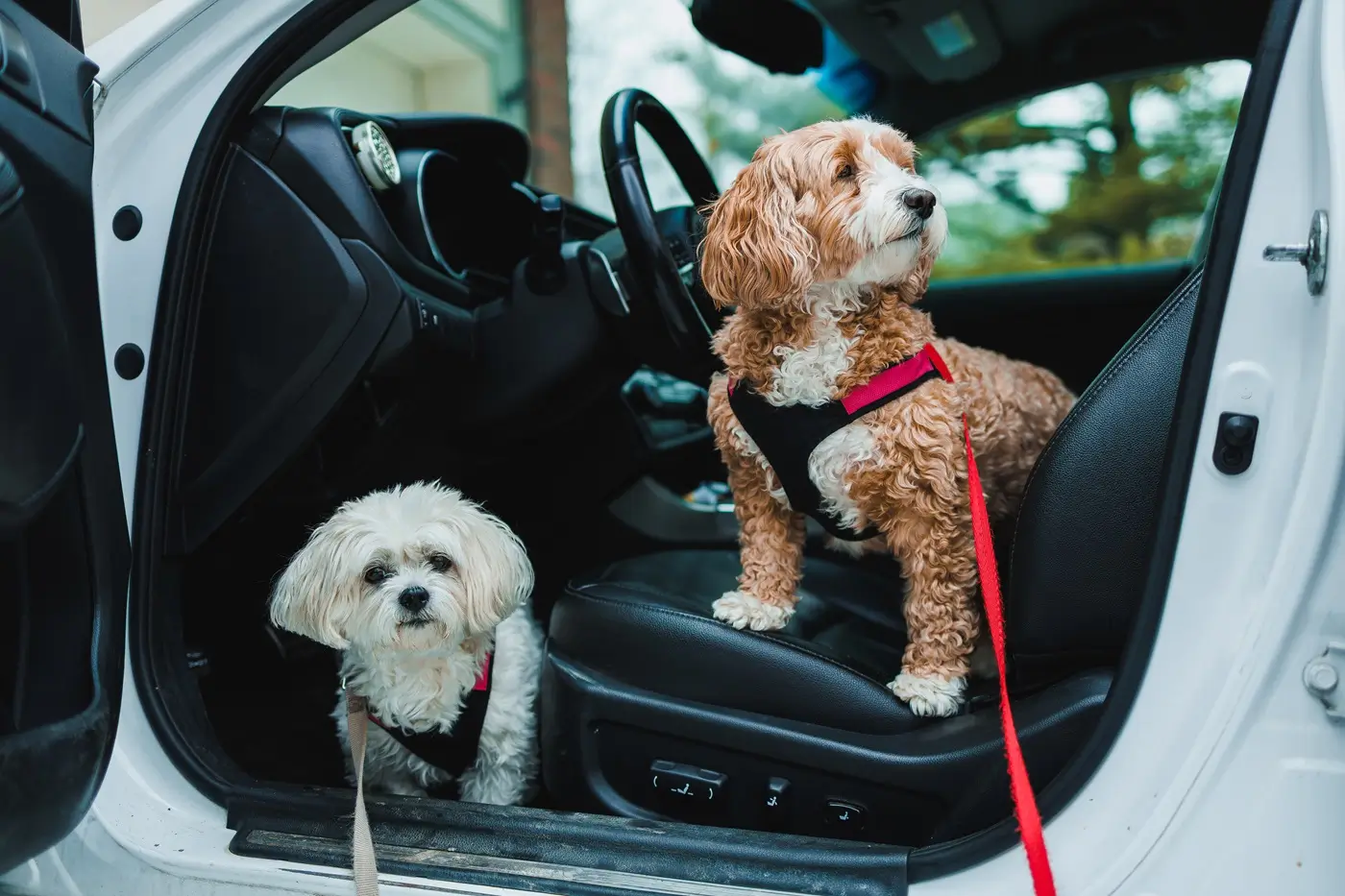
The cat carrier is by the door, the vet appointment is in 40 minutes, and the taxi booking screen has nowhere obvious to mention a passenger with four legs.
Most people assume a taxi will either take their pet or refuse at the kerb, with no way of knowing which until the car arrives. That uncertainty is unnecessary, because the answer is almost always decided at the booking stage, not on the doorstep.
This guide explains how pet friendly taxis work: what to say when booking, how to travel safely, and where the law draws a firm line. It draws on years of carrying pets to vets, kennels, and airports at Camberley Cars.
Can You Take a Dog or Cat in a Taxi?
Usually yes, but it is the operator’s decision rather than your right. Pets are carried at the discretion of the driver and the firm, so what matters is mentioning them when you book.
A passenger who books a car and then appears with an unannounced Labrador puts the driver in an awkward position. One who mentions a dog at the booking stage almost always gets a car that suits.
Book the pet, not just the passenger, and the journey is rarely a problem.
Also Read: A Complete Guide to Baby and Child Car Seats in UK Taxis
Assistance Dogs: Where the Law Is Different
Assistance dogs are not pets, and the rules are not discretionary. Under the Equality Act 2010, licensed taxi and private hire drivers have a legal duty to carry guide, hearing, and other assistance dogs, and to do so without any additional charge.
The dog must be allowed to stay with its owner in the passenger compartment, under the owner’s control. Refusing the journey, or charging extra for the dog, is a criminal offence that can lead to a fine of up to £1,000 and loss of a driver’s licence.
The only exception is a driver holding a medical exemption certificate, granted by the licensing authority on GP-supported grounds and displayed in the vehicle. Private hire operators also cannot refuse a booking because a passenger has an assistance dog.
An assistance dog must be carried by law; a pet is carried by agreement.
What to Tell the Operator When You Book
Give three details, and most bookings are settled in one sentence: what the animal is, roughly what size, and whether it will travel in a carrier.
Size decides the vehicle. A small dog on a lap and a large breed needing boot space are different jobs, and an estate or MPV solves the second easily when the operator knows in advance.
There is a reason operators ask. Allergies are common, and a firm needs to know so the right driver is sent and the car can be cleaned before the next passenger.
Travelling Safely With Dogs and Cats
The Highway Code advises that animals should be suitably restrained in a vehicle so they cannot distract the driver or be injured by a sudden stop. A pet carrier, a harness, or a boot with a guard all achieve this.
| Travelling with | What usually works | Mention at booking |
| Small dog | Footwell, lap, or a carrier | Breed and size |
| Large dog | Estate boot or MPV, with a blanket | Size and whether they shed |
| Cat | A secure pet carrier, always | That a carrier is coming |
| Assistance dog | Passenger compartment with the owner | Legally carried, no extra charge |
Cats deserve particular care. A cat loose in a moving car can panic, get under the pedals, or bolt the moment a door opens, so a closed carrier is the only sensible option.
Vet Trips, Kennels and Catteries
Vet journeys are the most common pet booking, and they often need a return leg with waiting time, since appointments rarely finish when booked. Agreeing a pickup window at the start avoids a second call from a waiting room.
Kennel and cattery runs cluster around holidays. The classic Surrey pattern is a Friday drop-off at kennels followed by an early airport transfer the next morning, and both are worth booking together.
For airport journeys, remember the pet is going to the kennels, not the terminal. Airlines and airports have their own strict rules, and a taxi cannot substitute for proper pet travel arrangements.
Also Read: Taxi vs Private Hire: What’s the Difference in the UK?
Practical Things That Make the Trip Easier
Bring a blanket or towel, especially after a walk. Experienced drivers keep an old blanket in the boot for pet jobs, but a wet dog straight off a muddy common is easier for everyone if the owner has one ready.
Keep the animal on a lead until the car door is closed, and let the driver open the boot rather than lifting a large dog in yourself. Some operators apply a cleaning charge if a vehicle needs valeting afterwards, so ask when booking rather than assuming.
A towel, a lead, and a heads-up when booking cover almost every pet journey.
Booking a Pet Friendly Taxi in Camberley and Surrey
Local firms are usually the easiest to arrange pet travel with, because a dispatcher who knows the drivers can match the job to a suitable car. Camberley Cars covers Camberley, Frimley, Farnborough, Yateley, Blackwater, Bagshot, and Sandhurst, with saloons, estates, MPVs, and minibuses, so mention any pet when booking and arrangements can be confirmed in advance.
For journeys starting well outside this Surrey belt, an operator nearer home will serve you better.
FAQs
Can I take my dog in a taxi in the UK?
Usually yes, but it is at the driver’s and operator’s discretion rather than an automatic right. Always mention the dog when booking, along with its size, so a suitable vehicle is sent. Unannounced pets are where problems start. Assistance dogs are different and must be carried by law, without any additional charge.
Do taxis have to take dogs?
Not pet dogs. Carrying a pet is a matter of agreement between you and the operator. Assistance dogs are the exception: under the Equality Act 2010, licensed taxi and private hire drivers must carry guide, hearing, and other assistance dogs at no extra cost, unless the driver holds a medical exemption certificate issued by the licensing authority.
How should a cat travel in a taxi?
Always in a secure, closed pet carrier placed on the seat or in the footwell. A loose cat can panic in a moving vehicle, get beneath the pedals, or escape when a door opens, which is unsafe for everyone. Mention the carrier when booking so the driver knows to allow space for it alongside any other passengers.
Is there an extra charge for taking a pet in a taxi?
It varies by operator. Some carry pets at no extra cost, while others apply a cleaning charge if the vehicle needs valeting afterwards. Ask when you book so the fare is clear before you travel. Assistance dogs must never be charged for, as any additional charge for carrying one is a criminal offence.
Can I book a taxi to take my dog to the vet?
Yes, and vet trips are among the most common pet bookings. Mention the appointment when booking, and consider arranging the return leg at the same time, since appointments often overrun. Agreeing a pickup window rather than a fixed time means you are not calling for a car from a busy waiting room.
Conclusion
Travelling with a pet by taxi comes down to one habit: tell the operator when you book, not when the car arrives. Give the animal’s type and size, use a carrier for cats, and bring a towel for a wet dog. Pet travel is by agreement, but assistance dogs must be carried by law at no extra charge. Camberley Cars covers the Surrey belt with vehicles from saloons to minibuses, so pet arrangements can be discussed when booking.
.
Follow Us
- Google Maps Link: Camberley Cars
- Facebook Link: Camberley-Cars
- Instagram Link: Camberleycars
- TripAdvisor Review: Camberley_Cars
- Taxi Code Reviews: Camberley-Cars
Rated by Our Customers on Google